An independent Seattle food desk
Shake Shack menu, explained for Seattle eaters
We read the menu the way a kitchen reads a ticket: core items, seasonal drops, and the customization layer that quietly changes the price. Then we tell you which of it travels to a Seattle apartment, and which of it you should eat where it’s made.
What this guide covers
Three layers, and a smaller board than you think
skavro is an editorial guide for people who order Shake Shack in Seattle and want to know what they’re actually getting before they spend. We cover the menu structure, chicken sandwich comparisons against Popeyes and Chick-Fil-A, crinkle-cut fries and loaded fries, frozen custard shakes, and how delivery apps change what shows up at your door.
Shake Shack started as a hot dog cart in Madison Square Park and grew into a fast-casual chain known for Angus beef burgers on toasted potato buns, crinkle-cut fries, chicken sandwiches, and frozen custard shakes. The menu is smaller than a traditional fast-food board, and it rotates, so we split it three ways: the core menu you can count on, the seasonal layer worth checking, and the customization layer where toppings and sauces move the price. Most ordering mistakes come from confusing those three.
This is not a franchise page and not a coupon site. It’s a reading guide. Each section below links to a longer page that goes deeper on one part of the menu or one ordering situation. Our office sits at 728 19th Ave, Seattle, WA 98122, and we write for the neighborhoods around it: Capitol Hill, the Central District, First Hill, and anyone ordering into a Seattle apartment or office.
Chicken is now half the decision
Breading, seasoning, crunch, and the trip home
Shake Shack
A crisp breading over a buttermilk marinade
Shake Shack’s chicken items use a buttermilk-based marinade, and the sandwich is now something people order on purpose rather than settle for. The seasoning reads on the crust, not in a sauce, so it survives a few minutes in a bag better than a heavily dressed sandwich.
Ask for sauce on the side where the app allows it. The bun gets soft fast when it sits against a wet topping.
Popeyes
The benchmark for crunch and spice
Popeyes reset expectations for what a chicken sandwich should taste like, and it still sets the crunch bar. The breading is heavier and the heat level is real, which means the sandwich holds its texture for the first several minutes and then starts to soften like any fried cutlet.
This is the one to eat closest to the counter. Order it for delivery only if you accept a softer crust.
Chick-fil-A
Balanced, consistent, made for speed
Chick-fil-A trades peak crunch for consistency. The filet is thinner, the pickle is doing structural work, and the sandwich is built to leave the drive-thru window and stay usable. If your order has a long walk or a short drive ahead of it, that consistency is the argument.
Less heat, less grease, and the one most likely to taste the same on the last bite as the first.
How we compare
Texture, seasoning, and the trip home
We score three things: breading texture, seasoning level, and crunch retention once the sandwich is no longer being eaten immediately. That last point is the one most comparisons skip, and it is the one that matters most if you are ordering delivery.
The full side-by-side lives on the comparison page, with the three sandwiches read at the same distance from the fryer.
Compare the chicken sandwichesStart with the burger question
One choice decides the rest of the order
If you’re deciding what to order, the first real question is whether you want a burger, a chicken sandwich, or a lighter plate, because that choice determines everything else. The burgers are the anchor of the menu, built on Angus beef patties and served on potato buns that hold up better than standard fast-food buns when the sandwich has to travel. That matters in Seattle, where a delivery order can sit in traffic on Pine or Broadway for a while.
A single ShackBurger is the baseline order. Doubles and stacked variations exist for people who want more beef, and the cheese sauce and ShackSauce are what most regulars notice first. If you’ve never ordered here, start with the simplest version of the burger, then adjust on your second visit. You learn more from the plain version than from a loaded one.
If you want beef
The burger side is the anchor. Start single, taste the patty and the bun, then decide whether the double is worth it to you. The bun is the part people underestimate: it is built to survive a bag ride that a standard fast-food bun does not.
If you want chicken
The chicken side has grown into a genuine competitor to the burger side, not just an alternative. It mirrors what happened across the whole US fast-casual market, where two Southern chains reset what people expect from a fried chicken sandwich.
If you want something lighter
The smaller plates and non-beef options are the least discussed part of the board and the easiest to get wrong if you are ordering for a group. Read them as their own category rather than as a fallback.
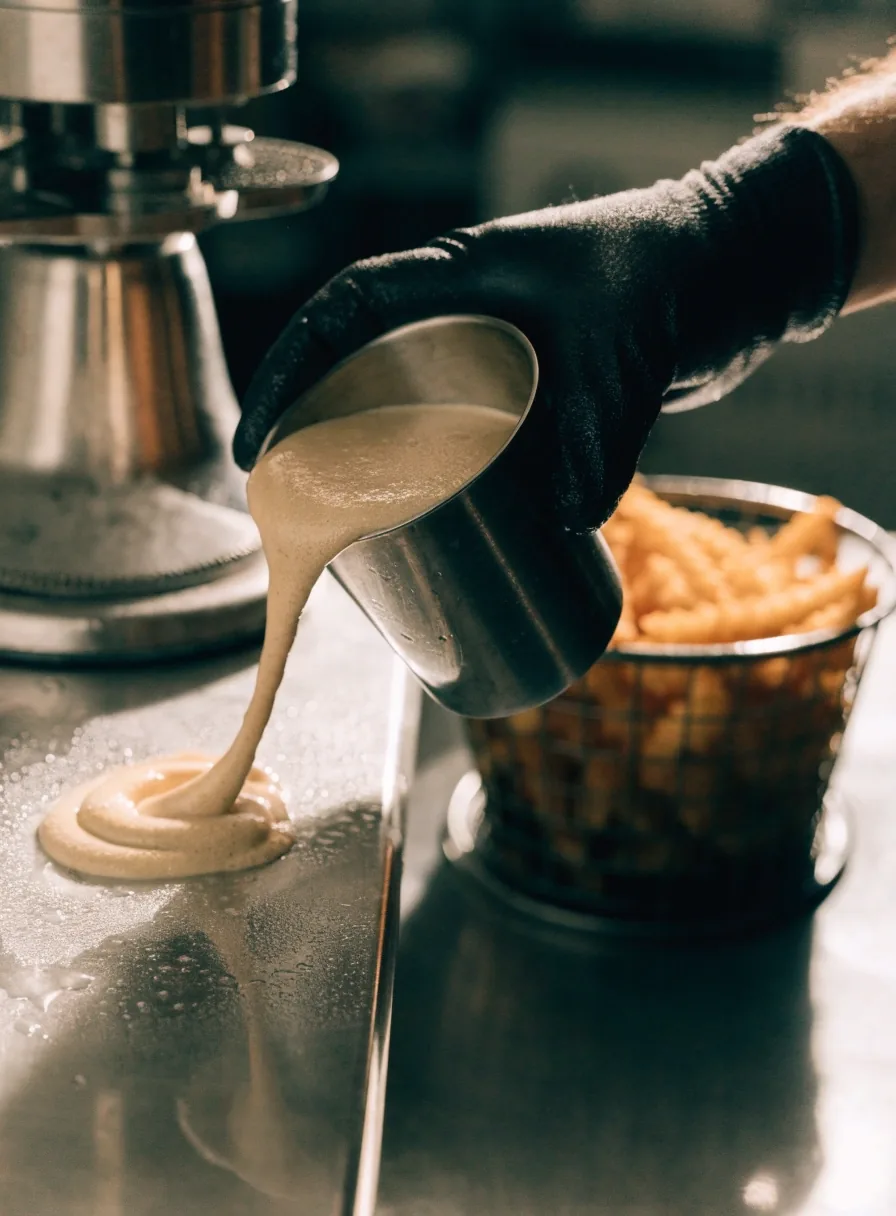
Fries are not a side note
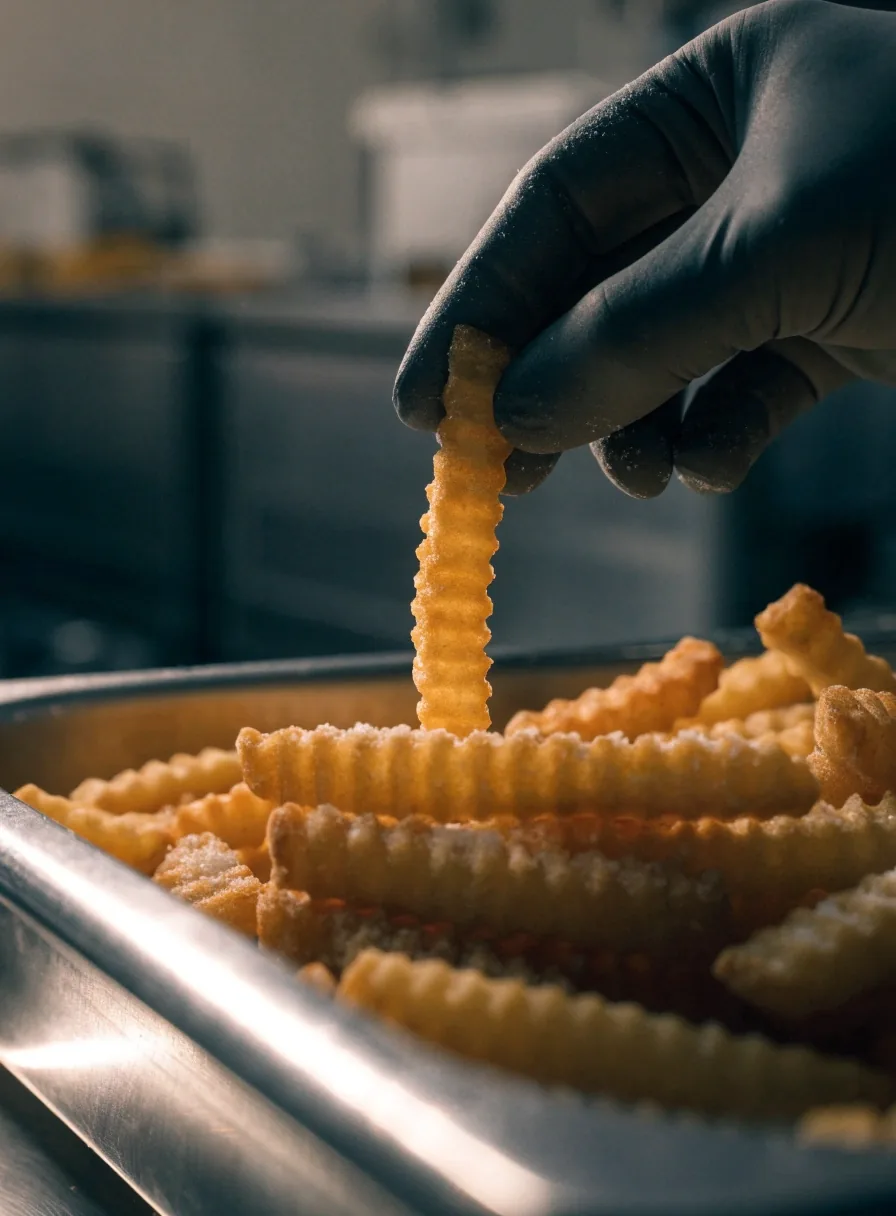
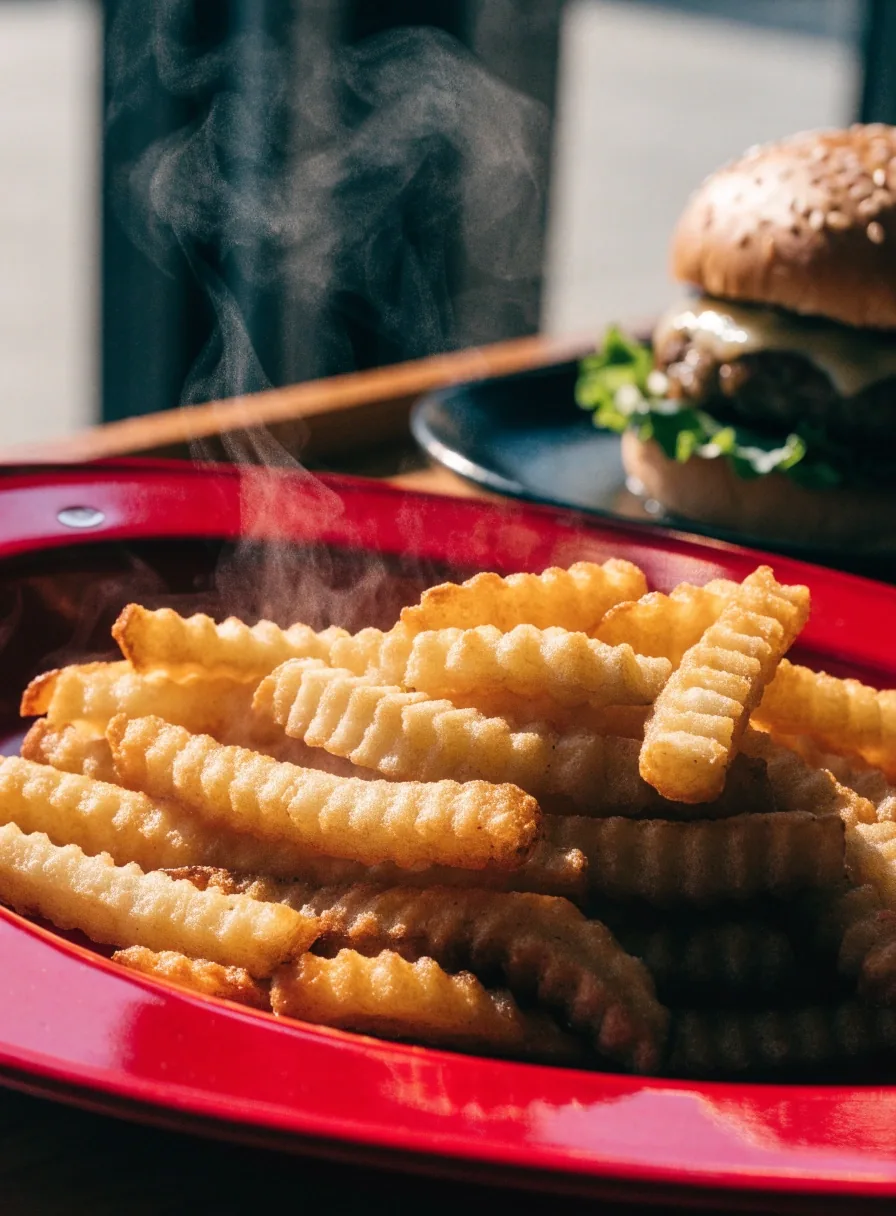
Crinkle-cut fries are a deliberate choice, not a default. The ridges hold seasoning and sauce better than a straight cut, which is why they work as a base for loaded fries and why the cut stays in the rotation. Fry shape affects how much of the seasoning actually reaches your mouth, and it affects how the fries survive a delivery bag.
If you’re ordering for a group, fries are the item most likely to disappoint, because they cool fastest and steam in a closed container.
See what travels wellFrozen custard is denser than soft serve, and that density is why the shakes hold a straw instead of collapsing into milk.
Shakes and frozen custard — read in full on the fries and shakes page
Frozen custard is the base for the shakes, and it’s a denser dessert than standard soft serve or ice cream. Seasonal dessert drops use the same custard base with different mix-ins, and they’re usually the item that changes fastest month to month.
A shake is not automatically worth adding to every order. It’s worth adding when you want the dessert to be the point of the meal. If you’re ordering a burger and fries for delivery, a shake adds cold weight to the bag and usually arrives fine, but it’s the one item where eating in is noticeably better.
How Shake Shack compares with other chains
People ask how Shake Shack stacks up against Five Guys, In-N-Out, or McDonald’s, and the honest answer is that they’re not really the same category. Shake Shack is positioned as a premium burger chain, which means higher prices and a smaller, more curated menu.
Different price and speed tiers
McDonald’s wins on speed and price. Five Guys wins on portion size and customization. In-N-Out has regional loyalty that Shake Shack can’t match in markets where it doesn’t operate, and pretending otherwise would be dishonest.
The comparison that matters most in Seattle is against the chicken chains, because that’s where the menu overlap is real. If you want a chicken sandwich specifically, Popeyes and Chick-fil-A are the benchmarks, and our comparison page treats them that way rather than pretending Shake Shack invented the category.
We keep a longer set of chain-level notes on the fast-casual page: which chains we track, what we compare, and where the categories stop overlapping.
Read the fast-casual chain notesOrdering through a delivery app
Grubhub, DoorDash, and Uber Eats all carry chain restaurants in Seattle. Each one changes the experience in small ways: menu accuracy, packaging, and how far the food travels.
Burgers and chicken
Angus beef patties on potato buns and the chicken sandwich hold up better than anything in a fried basket. They lose crust, not structure.
Holds well
Crinkle-cut fries
The weak link. Ridges hold sauce but also trap steam in a closed container, so a plain order goes soft first. Eat them within a few minutes of arrival.
Softens first
Loaded fries
Slightly better than plain, because the toppings add weight and moisture so the pile insulates itself. Still not a reheat item. Order them to share.
Share it
Frozen custard shakes
Density is on your side here. A custard shake generally arrives in the shape it left in, which is more than you can say for the fries.
Arrives fine
Order notes
Sauce on the side is the note worth writing, where the app allows it. It is also the only lever you have over how the sandwich is packed.
Worth writing
Grubhub remains a major US restaurant delivery app and still shows up in urban and campus-heavy markets, though it usually sits behind DoorDash and Uber Eats in overall prominence. That ranking matters less than whether the specific location near you is listed and how the app handles notes. Order items that travel well, add a note about sauce on the side, and expect fries to lose more than burgers.
A first-order plan, and what changes for a group
Keep the first visit small enough that you can actually taste the base menu.
First visit
If this is your first time ordering, keep it small. One burger or one chicken sandwich, one order of crinkle-cut fries, and a drink. Skip the loaded fries and the seasonal special on the first visit so you can taste the base menu without distractions. Then come back and adjust.
Group order
For a group, the math changes. Order a mix of burgers and chicken sandwiches so people can trade, get two fry orders instead of one, and add shakes only if someone specifically wants one. Shared food works better here than ordering individually, partly because the portions are sized for one person each.
What’s worth the extra spend
Not everything on a premium menu justifies the price difference. The burgers and the chicken sandwich generally do, because the ingredients and the bun quality show up in the first bite.
Loaded fries are worth it when you’re sharing and less worth it when you’re eating alone, because they’re heavy and don’t reheat. Seasonal shakes are worth trying once, then deciding for yourself. A simple rule: spend the premium on the item you’ll taste most, and save it on the sides. That usually means a single burger or chicken sandwich, a regular fry, and a shake only if you want dessert to be part of the meal.
Limited-time items tend to be bolder in flavor than the core menu, which is the point, but they also disappear without much warning. If you see something seasonal you want, order it that week rather than waiting.
We don’t guess at what’s coming next. Seasonal menus change, and any page claiming to know the next drop is guessing. What we can tell you is the pattern: seasonal items cluster around shakes and dessert, and chicken specials show up less often than beef ones.
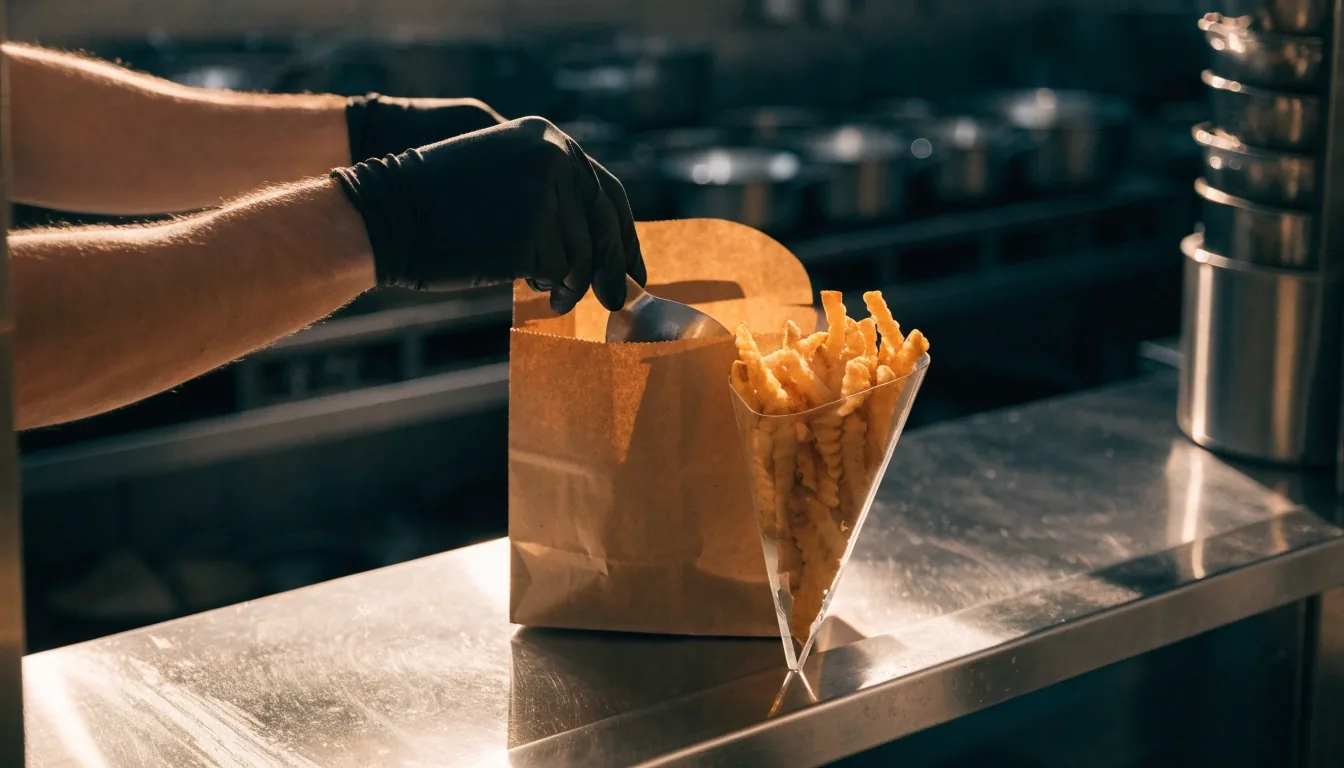
How we keep this current
Menu pages go stale fast. Chains change prices, drop items, and rotate seasonal menus, and a guide that doesn’t say when it was last checked is not much use. We review menu structure, item availability, and delivery-app listings on a regular cycle, and we update pages when something on the core menu changes.
If you spot something wrong, tell us. Corrections from readers are how most of our menu updates start. We’d rather be corrected than confidently outdated.
Send us a menu correctionQuestions readers actually send
What is the best order at Shake Shack? Ordering
There’s no single best order, but the most reliable starting point is a single burger or the chicken sandwich, one order of crinkle-cut fries, and a shake only if you want dessert to be part of the meal. Build from the core menu first, then add seasonal items once you know what you like.
Which items are actually worth the extra cost? Value
The burgers and the chicken sandwich justify the premium more than the sides do, because the ingredient quality shows up immediately. Loaded fries are worth it when shared. Seasonal shakes are worth trying once.
How does Shake Shack compare with Five Guys, In-N-Out, or McDonald’s? Chains
They occupy different price and speed tiers. Shake Shack is a premium burger chain with a smaller menu and higher prices. McDonald’s competes on speed and price, Five Guys on portion size, and In-N-Out on regional loyalty.
Which delivery app is best for ordering Shake Shack? Delivery
Grubhub, DoorDash, and Uber Eats all list chain restaurants in Seattle. Grubhub remains a major US restaurant delivery app and stays relevant in urban markets, but the practical difference is whether the location near you is listed and how the app handles order notes.
Are limited-time menu items better than the core menu? Seasonal
They’re often bolder, not automatically better. Seasonal items tend to be more flavorful and less consistent, and they disappear without much notice. Order them when you see them, but don’t count on them being there next month.
What side items travel well in delivery orders? Packaging
Burgers and chicken sandwiches hold up better than fries, which cool and steam in a closed container. Loaded fries travel slightly better than plain ones because the toppings add weight and moisture. Shakes generally arrive fine.