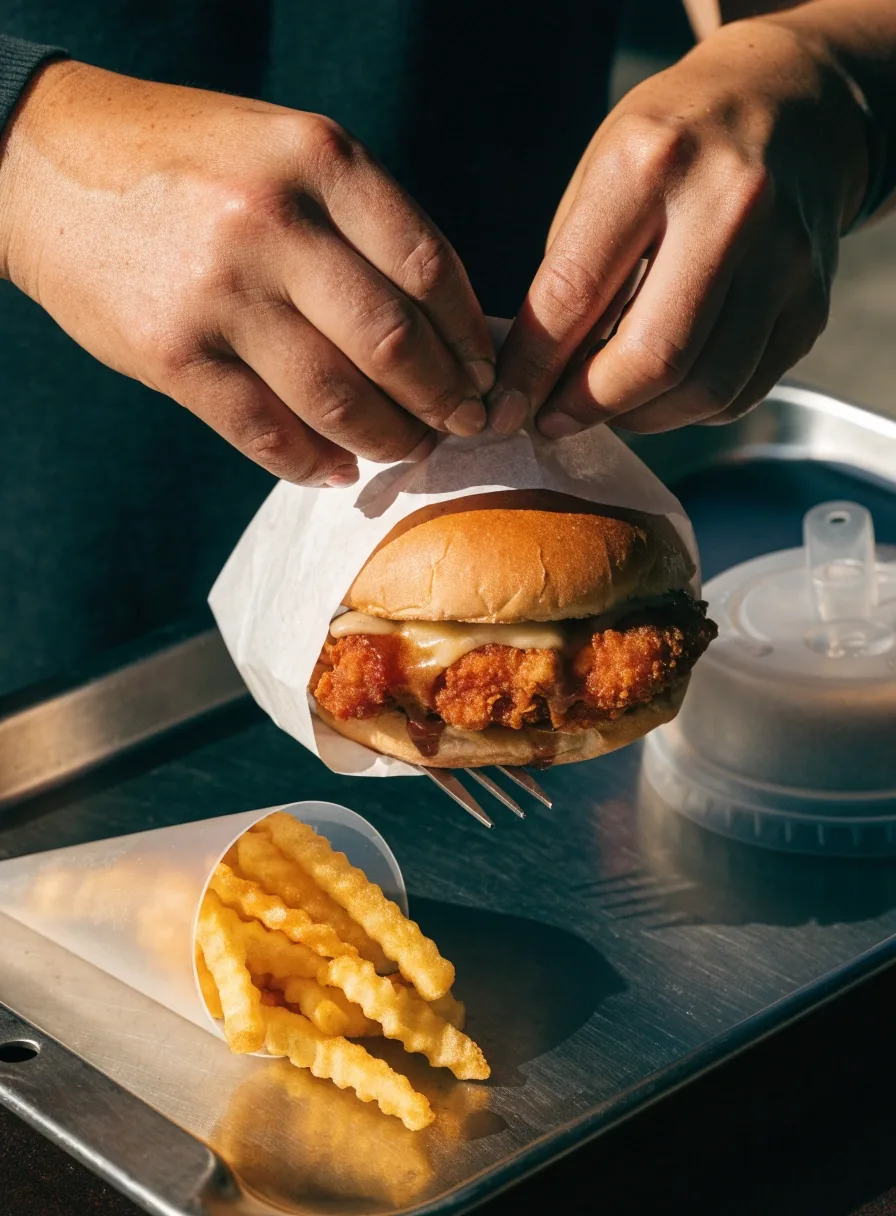
Crinkle-cut fries and a folded wrapper on a steel counter under warm dusk light in a fast-casual kitchen

Chain notes

What four chains taught us to expect

Short notes on how Chipotle, Domino's, Popeyes, and Chick-fil-A set the terms for customization, speed, and value — and where Shake Shack sits against all four.

Four chains set the habits the rest of us order by

Shake Shack doesn't operate in a vacuum. Chipotle, Domino's, Popeyes, and Chick-fil-A have each changed what people expect from a fast-casual order, and those expectations carry over to every chain, including burger restaurants. What follows are short, practical notes on how each of those chains shapes the way we judge speed, customization, and value.

Reading field

Six notes, in the order they land on your tray: customization, delivery, heat, consistency, the shared promise, and the Shake Shack position.

Two models

Where the order gets built, and where it gets carried

Chipotle and the customization habit

Chipotle taught a generation of US diners to expect a bowl or burrito built to their specification, with every ingredient chosen at the counter or in the app. That customization model set an expectation that carries over: people now assume they can adjust a fast-casual order without much friction.

For a burger chain, the lesson is about how customization is presented. Chipotle's strength is that the build is the product, not an add-on. Chains that bury customization in nested menus lose people who are used to one-step ordering.
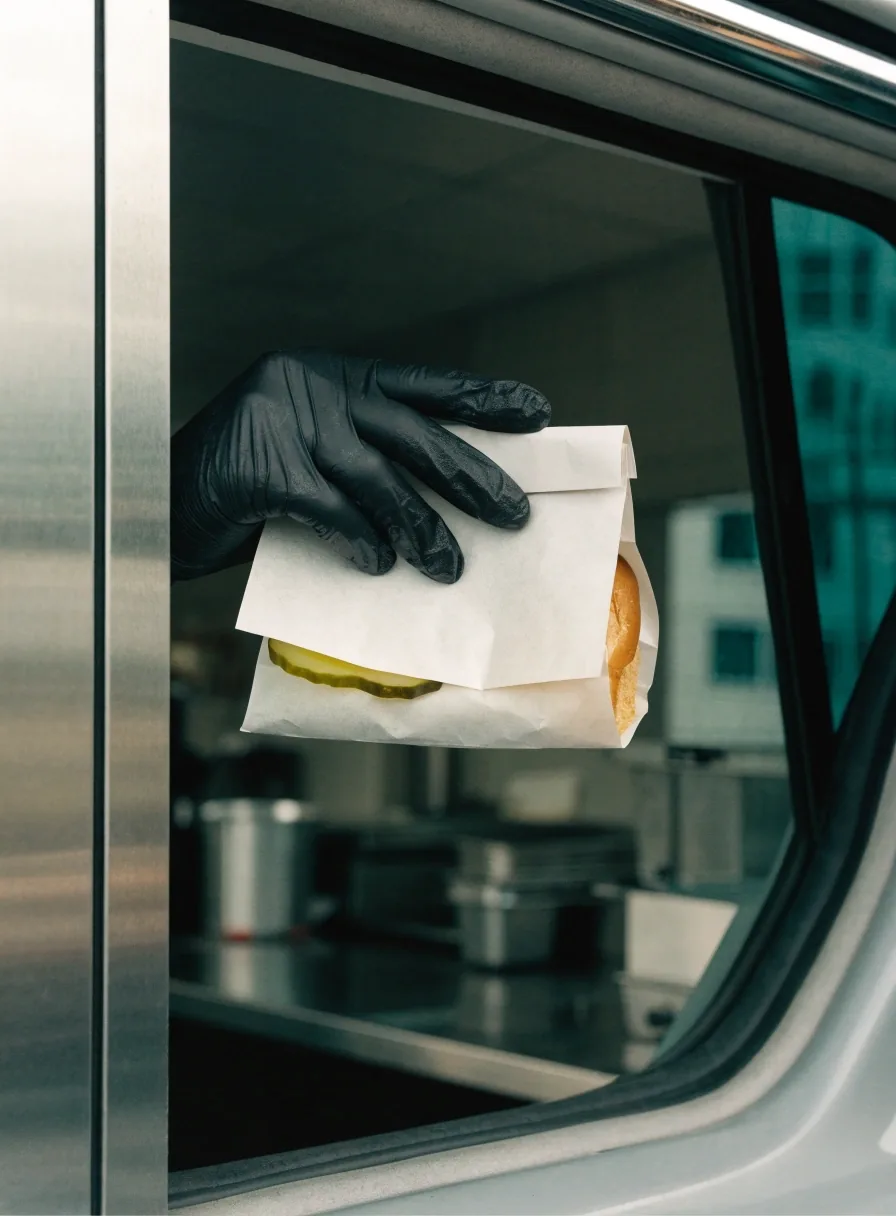
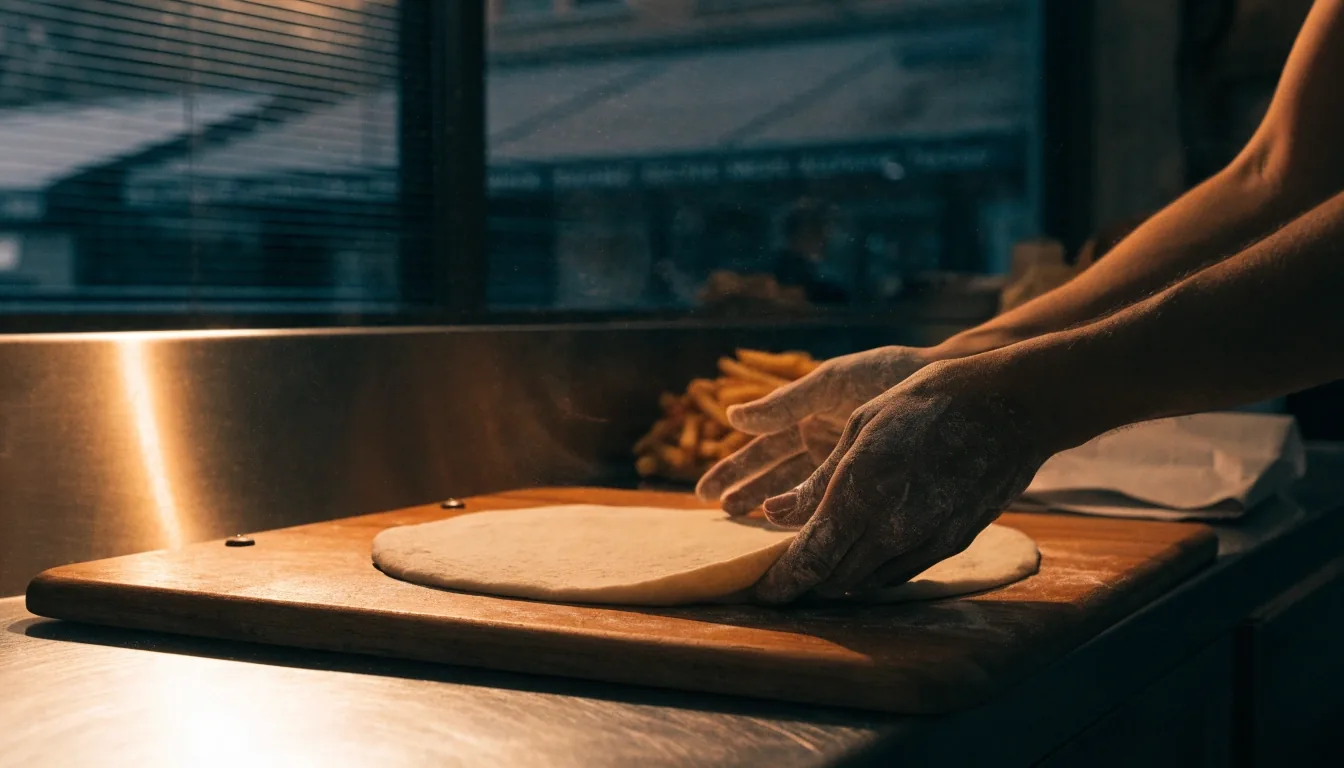
Domino's and delivery as the default

Domino's built its business as a delivery-first brand, which means its food, packaging, and operations were designed around the trip rather than adapted to it. The result is that a Domino's order arrives closer to its intended state than a burger order usually does.

That's not a knock on burgers. It's a note about what delivery-first design actually buys you: packaging built for heat retention, a delivery window built into the kitchen flow, and menu items that hold up over ten or fifteen minutes.

Why the difference shows up in the bag

Burgers and fries can't match all of that, but the principle explains why some orders travel noticeably better than others. A patty pressed onto a toasted bun and a cone of crinkle-cut fries are both at their best within a couple of minutes, while a pizza box is engineered to be opened later.

Delivery notes

Two more chains matter here for a different reason: Popeyes raised the heat ceiling on a chicken sandwich, and Chick-fil-A made consistency the product. Both changed what a customer is willing to accept from everywhere else.

Spice ceiling & service standard

What travels well

Heat, crunch, and the ten-minute window

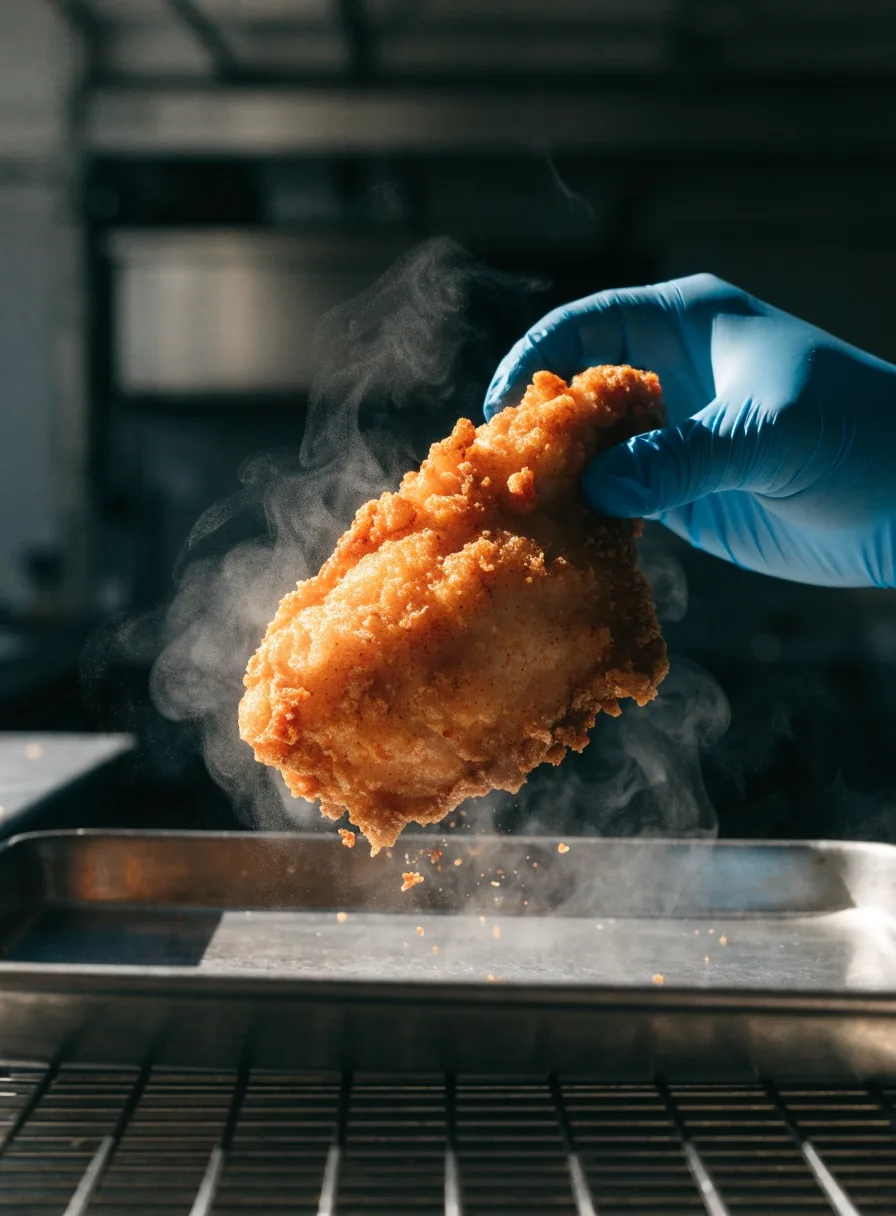
Heavily breaded spicy fried chicken fillets resting on a wire rack under hard side light

Heat benchmark

Popeyes reset the chicken sandwich category by offering a genuinely spicy option, and it set consumer expectations for what a chicken sandwich can taste like. The chain's breading is heavy and its spice level is real, which means it competes on a different axis than a milder sandwich does.

A fried chicken sandwich on a toasted bun on white paper on a steel pass-through counter

Consistency

Chick-fil-A's defining characteristic in the US market is consistency — the same sandwich at most locations, with drive-through and mobile ordering structured for speed.

A takeaway order of fries, a folded wrapper, and a shake lid arranged on a steel tray

Ten-minute test

For anyone comparing chicken sandwiches, Popeyes is the heat benchmark and the crunch benchmark. Chains that don't offer a spicy version at all are competing in a smaller space.

All four built a habit around a specific promise. Chipotle promises customization. Domino's promises delivery. Popeyes promises bold flavor. Chick-fil-A promises consistency. Each one is clear about what it's selling, which is why people return.

What these chains have in common

Where Shake Shack fits between the two models

Shake Shack's promise is closer to ingredient quality and menu craft, which is a harder thing to communicate in a single line. That's part of why its menu positions itself as premium rather than convenient.

Shake Shack sits between the customization-first and delivery-first models. It's not a build-your-own restaurant, and it's not a delivery-first brand, but it has adopted elements of both. Its menu is smaller than Chipotle's, its delivery presence is broader than Domino's in some markets, and its chicken sandwich competes with Popeyes and Chick-fil-A without copying either.

The result is a chain that gets judged against several different benchmarks at once, which is why comparisons involving Shake Shack can feel inconsistent. A burger is compared with Five Guys, a chicken sandwich is compared with Popeyes, and delivery is compared with pizza.

What this means for your next order

None of this is a flaw. It's a difference in what each chain is optimized for, and knowing which one you're ordering from makes the experience less surprising.

  • If you're used to Chipotle

    Expect a smaller set of choices at a burger chain. Customization exists, but it isn't the product the way a Chipotle build is — you're choosing additions, not composing the whole order.

  • If you're used to Domino's

    Adjust expectations for burgers and fries. The order still arrives, but a fried item and a cold drink don't hold their best state the way a boxed pizza does, which is worth remembering when you plan a delivery window.

  • If you're used to Chick-fil-A

    Expect more variation between visits. Consistency at that level is a service standard more than a flavor standard, and it's hard to match — a chain that does a very good version of a sandwich isn't promising that same sandwich every single time.

  • If you're used to Popeyes

    Read the menu for heat, not just for texture. A spicy chicken sandwich is a different order than a mild one, and chains that don't carry a spicy build are answering a different question with the same words.

The useful move is to name the model before you order. An app that assumes a build-your-own flow, a delivery window, a spice level, or a repeatable standard is telling you which chain you're actually dealing with — and once that's clear, the rest of the order makes sense.

A note on the phrase fast-casual

The label covers a wide range in the US: counter-service burritos, delivery-first pizza, drive-through chicken, and burger counters in between. That's why a single ranking gets awkward. Each of these chains is optimized for a different part of the visit, and the comparison only holds together when you know which part you care about.

Common questions

Questions readers ask about chain expectations

Why compare these four chains at all? Open

Because they set the reference points a US diner carries into every other fast-casual order. Chipotle set the bar for building your own, Domino's set the bar for delivery, Popeyes set the bar for heat, and Chick-fil-A set the bar for repeatability. Once you know which bar a chain is being measured against, a review stops sounding like a contradiction.

Does customization slow an order down? Open

It depends on where the build happens. A counter that keeps components in front of the line can rebuild a bowl in seconds, while a kitchen that treats each change as a special order will queue it behind everything else. The visible difference is usually whether the choices sit at the start of the visit or at the end.

Is spicy always the better chicken sandwich? Open

No — heat is a different axis, not a higher score. A heavy spicy breading can hide a thinner cut of chicken, and a well-made mild sandwich with better seasoning and a cleaner crust will often beat a hot one. Popeyes is worth treating as the benchmark for heat and crunch rather than as an automatic winner.

Where do I start if I actually want the Shake Shack detail? Open

The Shake Shack menu guide walks through the menu item by item, and the chicken sandwich comparison puts Shake Shack side by side with Popeyes and Chick-fil-A. If the question is about how an order actually arrives, the delivery ordering guide covers that end of the trip.

Taste a chain difference you think we've read wrong?

Address
728 19th Ave, Seattle, WA 98122, USA

Hours
Monday–Sunday, 10:00 AM – 10:00 PM

Reach us
+1 206 812 4940
info@skavro.delivery

SpeedyMealX

An editorial guide to US fast-casual eating — Shake Shack menu detail, chicken sandwich comparisons, crinkle-cut fries, frozen custard shakes, and how delivery changes the order.